
EcoUnplug

Wireless advancement
has outpaced awareness
of wildlife and ecosystem impacts.
Growing scientific research suggests that wireless and cellular exposures are harmful to diverse animals and plants.
Negative effects have been documented in honeybees and other pollinators, migratory birds, turtles, frogs, other wildlife, trees and plants.
The peer reviewed scientific research below describes reproductive issues, orientation and navigation problems, behavioral changes, and other detrimental effects across diverse species exposed to man-made wireless and cellular radiofrequencies.
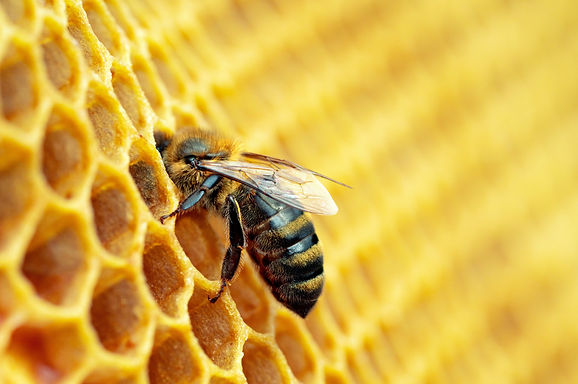
"We may be damaging non-human species
at ecosystem and biosphere levels across all taxa."
Levitt, Lai and Manville, 2022
Low-level EMF effects on wildlife and plants: What research tells us about an ecosystem approach
Biologists are speaking up.
As the damaging effects become more apparent, wireless emissions are increasingly recognized as a form of electrical pollution, adding to the impacts of other environmental stressors such as pesticides, habitat destruction, deforestation, and climate change.
A Stressor on the Ecosystems of the Earth
Along with the proliferation of devices in our homes and communities, the wireless world of humans now reaches into parks and forests where wildlife were previously unexposed. The vast infrastructures that support today's wireless technologies have increasingly penetrated rural and remote landscapes, introducing their radiofrequency (RF) emissions into protected nature preserves and wilderness habitats not often visited by humans.
Flora and fauna worldwide are now being exposed at levels unprecedented in their evolutionary development.

"We strongly recommend the implementation of complementary measures aimed at reducing wildlife exposure to RF-EMF, particularly for species of major conservation concern."
- Jeremy S. P. Froidevaux, Laura Recuero
Virto, Marek Czerwinski, Arno Thielens,
and Kirsty J. Park, 2023
Addressing Wildlife Exposure to Radiofrequency Electromagnetic
Species Decline
Wireless pollution may be a contributing factor in the dramatic declines in species diversity and populations seen in recent years.
New research published in 2026 found that bird decline is accelerating. The U.S. Fish and Wildlife Service estimates that North America has lost nearly 1 out of every 4 birds, with many species at risk of disappearing entirely.
The monarch butterfly count in California decreased from millions in the 1990s to 200,000 monarchs in 2017, and fewer than 2,000 monarchs in 2020. The 2025 count of 12,260 was the third lowest recorded total since monitoring began.
The status of amphibians is deteriorating globally according to a 2023 evaluation for the International Union for Conservation of Nature, with 41 percent of amphibian species threatened worldwide.
Species decline involves multiple stressors including habitat loss, agricultural practices, and climate change. Because of the diversity of species impacted by radiofrequency radiation from wireless infrastructure, biologists increasingly acknowledge the role of wireless technology as a possible contributing factor.
Peer Reviewed Scientific Research
.jpg)


Flora and Fauna: A Three-Part Review Series
This comprehensive series reviews over 1,200 scientific studies on the effects of electromagnetic fields (EMFs) on flora and fauna. It found that, taken together, there is evidence that the planet’s ecosystems are seriously threatened by increasing wireless radiation levels and other man-made EMFs. The authors concluded that current levels may act in a synergistic manner with adverse effects on bird and wildlife migration, food attainment, mating, reproduction, nest and den building, and even survivorship.

"Due to the continuous rising ambient levels of nonionizing electromagnetic fields (EMFs) used in modern societies - primarily from wireless technologies - that have now become a ubiquitous biologically active environmental pollutant, a new vision on how to regulate such exposures for non-human species at the ecosystem level is needed."
- B. Blake Levitt, Henry C. Lai, Albert M. Manville, 2021
Effects of non-ionizing electromagnetic
fields on flora and fauna, Part 3.
Exposure standards, public policy,
Provides background on the exponential increases in EMF levels seen across nearly all environments in recent decades, describes data on wildlife and habitat exposure to EMF, and reviews the biological effects seen across all taxa and frequencies, including orientation and migration, food finding, reproduction, longevity and survivorship.
Describes the impacts of EMF exposures on diverse species of flora and fauna. Describes species' unique sensitivities to exogenous EMF in ways that surpass human reactivity, complex endogenous reactions that are a possible contributing factor in species extinctions. Explores non-human magnetoreception mechanisms, and adverse effects on orientation and migration, food finding, reproduction, mating, nest and den building, longevity and survivorship. Part 2 includes extensive supplemental tables of documented harmful effects in animals, even at vanishingly low intensities that are commonplace today. The tables match rising ambient EMF levels to health effects in the environment.

There are no regulatory standards for the protection of birds and wildlife from wireless radiation, despite the fact that wireless technologies are widely biologically active and have become ubiquitous as an environmental pollutant. The authors recommend a new vision for legal protections given the ongoing growth in wireless exposures.
Insects and Wireless: A Meta-Analysis
In 2023 biologists Thill and colleagues reviewed 185 papers on the effects of electromagnetic fields (EMF) on insects, and 145 studies on insect magnetic sensing. Insects were harmed even at commonly used HF strengths that fall within current regulatory thresholds for humans. Observed findings included decreased reproductive capacity, oxidative stress, DNA damage and impaired development among studies of high frequency (HF) range fields. The human threshold for HF field strength is less than 6 V/m (~100mW/m2), set by the International Commission on Non-Ionizing Radiation Protection (ICNIRP). Statistically significant toxic effects in insects were found in 31 of the 36 studies at these allowable strengths. Because these field strengths are permitted under the current regulatory framework, they are ubiquitous in the environment today, meaning that insects are exposed regularly across varied landscapes and habitats. The review also found significant effects among low frequency (LF) range experiments (n=133) including behavioral, metabolic and reproductive effects.

"Toxic effects on insects may occur at radiation levels that are considered safe for humans, particularly in the higher frequency bands."
- Alain Thill, Marie-Claire Cammaerts and Alfonso Balmori, 2023
Biological Effects of Electromagnetic Fields on Insects: A Systematic Review and Meta-Analysis
Wildlife Orientation and Cell Tower Radiofrequencies
Biologist Alfonso Balmori documents man-made radiofrequency (RF) fields as an emerging threat to wildlife orientation. He describes the scientific evidence showing that exposure at levels currently found near cell towers may alter the receptor organs to orient in the magnetic field of the earth. These results could have important implications for migratory birds and insects, posing a threat to wildlife not only in urban areas but also natural and protected areas where powerful cell towers have become increasingly dense. Given the remarkable expansion of RF radiation over the past 20 years, Balmori notes the relevance of the topic to ecology, conservation and experimental biology due to its documented effects on animals and plants.
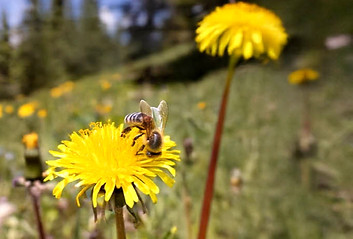
"At the present time, there are reasonable grounds based on scientific evidence for believing that microwave radiation constitutes an environmental and health hazard."
Alfonso Balmori, 2015
Anthropogenic radiofrequency electromagnetic fields as an emerging threat to wildlife orientation
Low-Level EMF Effects on Wildlife and Plants
This critical overview of scientific research concluded that wildlife and plants in all species studied are likely adversely affected by man-made electromagnetic fields (EMF) in the non-ionizing spectrum, which includes the frequencies used by all wireless and cellular technologies. Due to differing physiologies and sensitivity levels among non-human species, existing exposure standards for humans are inappropriate for trans-species protection. "Any existing exposure standards are for humans only; wildlife is unprotected." This review concludes that non-human species clearly experience EMF as environmental stressors, and that this largely unrecognized pollutant can conceivably alter delicate ecosystems — and that this may already be happening at biosphere scale. "Electroreception mechanisms, including magneto/electroreceptors, magnetite, and cryptochrome/radical-pairs, enable vast living organisms in all environments to detect the presence of, and immediate changes, in non-ionizing electromagnetic fields at very low intensities across a range of frequencies. Such heightened sensitivities function far beyond human perception and create unique vulnerabilities that can easily be disturbed by novel man-made fields."

We may already be overwhelming some species' natural biological sensors that evolved over eons.
- B. Blake Levitt, Henry C. Lai, Albert M. Manville, 2022
Low-level EMF effects on wildlife and plants: What research tells us about an ecosystem approach

Department of Interior on Birds and Cell Towers
The U.S. Department of the Interior raised concerns about cell tower radiation negatively impacting the health of migratory birds in a 2014 letter addressing the FCC. "Nesting migratory birds and their offspring have apparently been affected by the radiation from cellular phone towers in the 900 and 1800 MHz frequency ranges - 915 MHz is the standard cellular phone frequency used in the United States." The letter urges the FCC to address "cumulative impacts on those 241 species for which the incremental impact of tower mortality… is most likely significant,” documenting radiation studies on wild nesting birds showing harmful impacts. The Department also describes the radiation standards set by the FCC as "outdated" and not protective of non-human species against the adverse effects of cell tower radiation. “The second significant issue associated with communication towers involves impacts from nonionizing electromagnetic radiation emitted by these structures. Radiation studies at cellular communication towers were begun circa 2000 in Europe and continue today on wild nesting birds. Study results have documented nest and site abandonment, plumage deterioration, locomotion problems, reduced survivorship, and death (e.g., Balmori 2005, Balmori and Hallberg 2007, and Everaert and Bauwens 2007). Nesting migratory birds and their offspring have apparently been affected by the radiation from cellular phone towers in the 900 and 1800 MHz frequency ranges- 915 MHz is the standard cellular phone frequency used in the United States. However, the electromagnetic radiation standards used by the Federal Communications Commission (FCC) continue to be based on thermal heating, a criterion now nearly 30 years out of date and inapplicable today. This is primarily due to the lower levels of radiation output from microwave-powered communication devices such as cellular telephones and other sources of point-to-point communications; levels typically lower than from microwave ovens. The problem, however, appears to focus on very low levels of non-ionizing electromagnetic radiation. For example, in laboratory studies, T. Litovitz (personal communication) and DiCarlo et al. (2002) raised concerns about impacts oflow-level, non-thermal electromagnetic radiation from the standard 915 MHz cell phone frequency on domestic chicken embryos- with some lethal results (Manville 2009, 2013a). Radiation at extremely low levels (0.0001 the level emitted by the average digital cellular telephone) caused heart attacks and the deaths of some chicken embryos subjected to hypoxic conditions in the laboratory while controls subjected to hypoxia were unaffected (DiCarlo et al. 2002). To date, no independent, third-party field studies have been conducted in North America on impacts of tower electromagnetic radiation on migratory birds. With the European field and U.S. laboratory evidence already available, independent, third-party peer-reviewed studies need to be conducted in the U.S. to begin examining the effects from radiation on migratory birds and other trust species.”

Federal Court Admonishes FCC, 2021
In a historic decision the United States Court of Appeals for the District of Columbia Circuit found in favor of environmental health groups and petitioners in 2021, ordering the FCC to explain why it ignored scientific evidence showing harm from wireless radiation. In Environmental Health Trust et al. v. FCC, the court held that the FCC failed to address "impacts to wildlife and the environment" and multiple other issues including impacts of long term wireless exposure and impacts to children. The court ordered the FCC to “(i) provide a reasoned explanation for its decision to retain its testing procedures for determining whether cell phones and other portable electronic devices comply with its guidelines, (ii) address the impacts of RF radiation on children, the health implications of long-term exposure to RF radiation, the ubiquity of wireless devices, and other technological developments that have occurred since the Commission last updated its guidelines, and (iii) address the impacts of RF radiation on the environment.”

"A complete failure to respond to comments concerning environmental harm caused by RF radiation"
- US Court of Appeals for DC Circuit in Environmental Health Trust v. FCC, on FCC lack of response, 2021
Species Decline Following 4G Expansion
In his 2017 Report on the Disappearance of Species to the United Nations Educational Scientific (UNESCO), Australian botanist Mark Broomhall documents the impact of increased electromagnetic radiation (EMR) resulting from the expansion of 4G telecommunications in the Nightcap National Park, a World Heritage Site. The disappearance of large numbers of species from the area is documented over the 15-year period from 2000 to 2015, corresponding with increases in electromagnetic radiation levels emitted from a cell tower complex positioned in the Mount Nardi area of the park. Following deployment of the 4G cell tower complex, Broomhall documents the exodus of 49 bird species, as well as declines in other wildlife and in insects. The report includes a detailed timeline of telecommunications expansion in the park with corresponding documentation of bird and wildlife decline. In 2009 the installation of enhanced 3G technology preceded the disappearance of 27 bird species and simultaneous insect decline. In 2012-2013, with the construction of a new tower and an upgrade to 4G, preceded a rapid exodus of an additional 49 bird species, scarcity of all locally known bat species, and drastic decline of butterfly, frog, cicada and ant species. - 3 bat species once common have become rare or gone - 11 threatened and endangered bird species are gone - 11 migratory bird species are gone - 86 bird species are demonstrating unnatural behaviours - 66 once common bird species are now rare or gone Report detailing the exodus of species from the Mt. Nardi area of the Nightcap NationalPark World Heritage Area during a 15-year period (2000-2015.)

"From 70 to 90 percent of the wildlife has become rare or has disappeared from the Nightcap National Park within a 2-3 km radius of the Mt. Nardi tower complex.”
- Mark Broomhall, 2017
Birds and 5G: A Scientist's Testimony, 2023

"5G is particularly of concern to... small birds such as
hummingbirds and small songbirds."
The study of 5G technology’s effects on bird, bee, and insect populations, as well as long term impacts in children, was mandated in Maine by the State Legislature’s bill LD 697 in 2023. In testimony to the legislature, retired U.S. Fish and Wildlife Service Senior Wildlife biologist Albert Manville describes the effects of man-made radiofrequency radiation on diverse species including birds, bats, monarchs, honeybees and other animals, describing the millimeter-wave frequencies of 5G as a new form of electrosmog. He calls for the classification of radiofrequency radiation as an environmental pollutant, and for science-based regulation of 5G for the protection of wildlife and the public. Noting that the current FCC standards for RFR are more than 35 years out of date, he emphasizes that incredibly low levels of wireless and other electromagnetic energy impact birds and pollinators negatively, rendering the decades old regulations inapplicable to today's much higher levels than in the 1990s. Regarding birds and 5G: "Birds have hollow feathers which have piezoelectric properties, allowing millimeter waves to penetrate deep into bird body cavities, disrupting crucial biological functioning." Regarding pollinators: "Bees and monarch butterflies, among others, are already in trouble here in Maine and elsewhere. These millimeter wavelengths resonate with animal and plant tissues particularly of these smaller organisms whose sizes are comparable in size to the millimeter frequency lengths. Regarding diverse species: "5G is particularly of concern to children, fetuses, plants, insects, and small birds such as hummingbirds and small songbirds many of which are summer residents here in Maine."

"Bees and monarch
butterflies, among others, are already in trouble here in Maine and elsewhere. These millimeter wavelengths resonate with animal and plant tissues particularly of these smaller organisms whose sizes are comparable in size to the millimeter frequency lengths."
Bee Colony Collapse and Bird Navigation Issues
Bioscientist Ulrich Warnke describes the natural electrical and magnetic signals that have guided animals throughout evolution, and explains what happens when these natural signals are suppressed and distorted by artificial, tech-generated fields. "Animals that depend on the natural electrical, magnetic and electromagnetic fields for their orientation and navigation through earth's atmosphere are confused by the much stronger and constantly changing artificial fields created by technology and fail to navigate back to their home environments." With a particular focus on the relatively sudden and widespread appearance of the dying bees phenomenon, Warnke explains how factors such as pesticides, mites, severe winters, and genetically modified seeds fail to explain bee colony collapse. The mechanisms of bee and bird orientation are described, including the roles of free radicals and magnetite conglomerates, and how these become disrupted by man-made high frequencies.

Technically produced electromagnetic oscillations in the MHz range and magnetic impulses in the low frequency range persistently disturb the natural orientation and navigation mechanisms created by evolution.”
- Ulrich Warnke, 2009
Birds, Bees and Mankind: Destroying Nature with "Electrosmog"
Declaration on 5G and Wildlife, 2023
In his 2023 declaration biologist Balmori summarizes three decades of his own research and that of other biologists studying wildlife and wireless radiation. He describes the greatly increased density of base stations or cell towers across the world, and the microwave radiation they produce at a variety of frequencies that interfere with the nervous systems of wildlife and other living organisms. He describes findings linking prolonged exposure to negative effects on reproductive capacity.
Excerpts: "The increase in the density of base stations across the world has greatly increased electromagnetic pollution or “electrosmog,” especially in urban centers. These devices produce microwave radiation at a variety of frequencies, including 700 MHz, 900 MHz, 1700 MHz, 1800 MHz, 1900 MHz, and 2100 MHz pulsed waves that interfere with the nervous systems of living beings. Prolonged exposure has also been shown to have negative effects on sperm motility characteristics and reproductive capacity. There exist thousands of scientific studies that indicate danger for the health and humans and other living beings from this kind of microwave radiation." "5G wireless technology will add much higher frequencies, in the GHz spectrum, and a much greater density of antennas is being planned, as many as one base station every one hundred meters for each wireless carrier. Not only in the United States, but in Spain and everywhere in the world, telecommunications companies are beginning to install these antennas on the streets and sidewalks of cities in front of people’s homes, and anecdotal reports of damage to birds and illness in humans are beginning to emerge. Based on my own research and my familiarity with the literature, it is my opinion that such a high density of cellular base stations close to where people live, and throughout cities, will cause irreversible harm not only to the people who live in the cities but to the birds, wildlife and trees."

"Based on my own research and my familiarity with the literature, it is my opinion that such a high density of cellular base stations close to where people live, and throughout cities, will cause irreversible harm not only to the people who live in the cities but to the birds, wildlife and trees."
- Alfonso Balmori, 2023

"Any existing exposure standards are for humans only; wildlife is unprotected."
- B. Blake Levitt, Henry C. Lai,
Low-level EMF effects on wildlife and
plants: What research tells us about